



Things to Do in Zilina, Slovakia: The Ultimate Adventure Guide
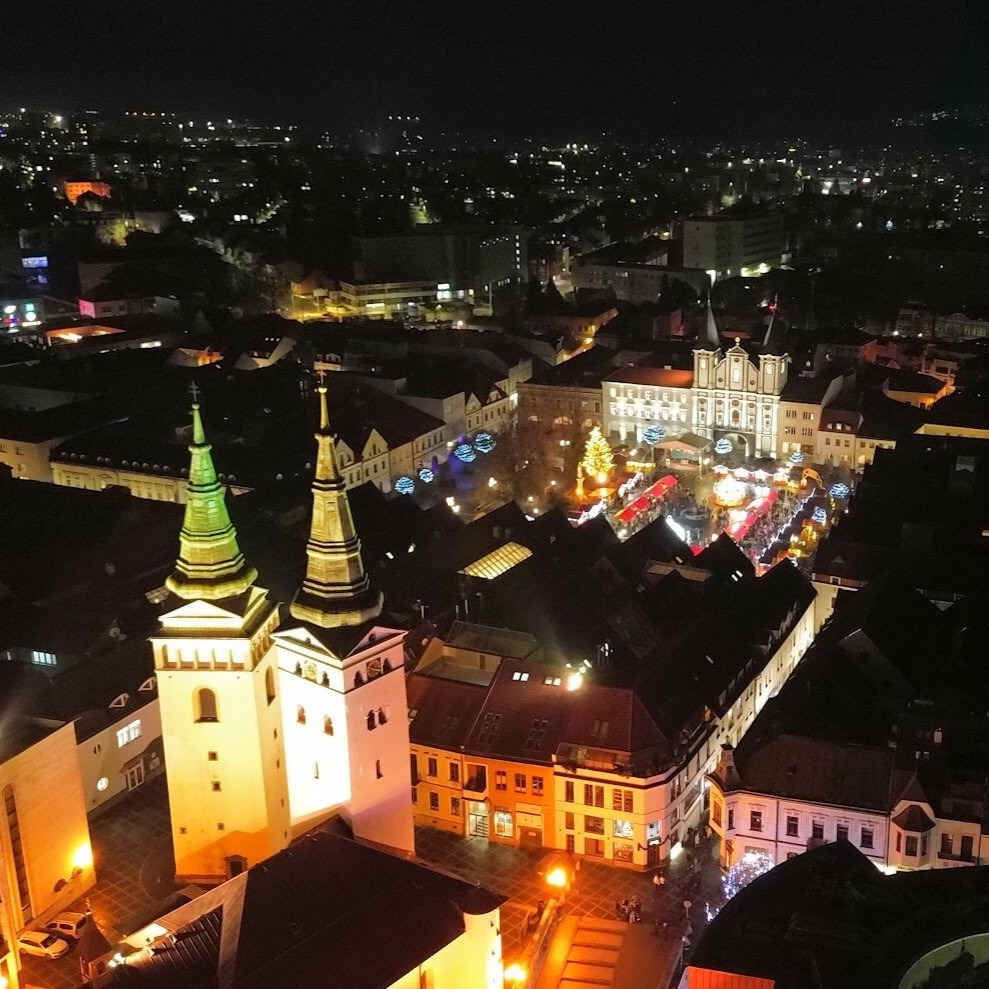
Zilina the center of North-West Slovakia
Zilina offers plenty of things to do, thanks to its stunning location in the heart of the Malá Fatra National Park and on the banks of the Váh River, the longest river in Slovakia. Žilina, the vibrant center of north-western Slovakia, lies just 200 km from Bratislava—easily reachable in about two hours by car or train.
Whether you’re planning a trip to Slovakia or already on the road, don’t miss the beauty of the Žilina region—from conquering rocky peaks at sunrise to unwinding in a centuries-old square with a refreshing Slovak beer in hand.
Why visit Zilina, Slovakia?
Zilina is the fourth-largest city in Slovakia and the undisputed cultural and economic center of north-western Slovakia. Located just 200 km from Bratislava, this vibrant city lies at the crossroads of the Vah, Kysuca, and Rajcianka rivers—a strategic position that has shaped its role as an important trading hub for more than 700 years. Today, Zilina charms visitors with its beautifully preserved old town, lively squares, and youthful energy driven by a large university population.
When looking for things to do in Zilina, you’ll quickly discover that the city is more than just a cultural stop. Its greatest advantage is its location. Within just 25–30 minutes from the city center, you can reach Mala Fatra National Park, one of the most stunning natural destinations in Slovakia. From scenic hiking trails and dramatic mountain peaks to peaceful valleys and traditional villages, the Zilina region offers the perfect mix of adventure and relaxation.
Whether you’re planning a trip to Slovakia or searching for hidden gems in Central Europe, Žilina stands out as a destination that combines urban charm with easy access to unspoiled nature—making it an ideal base for exploring the north of the country.
Old Town of Zilina – Marianske Square and beyond
Like many other Slovak cities, Zilina was influenced by German colonization in the 13th century, when King Bela IV invited German settlers to repopulate the region after the Tatar-Mongol invasion. Thanks to their influence, Zilina is home to the beautiful and unique Marianske Square (Marianske namestie)—a perfectly square marketplace lined with historic burgher houses, each with its own arcades. The square measures approximately 100 meters on each side, creating a harmonious and rare urban layout.
Beneath the square lies a system of Renaissance cellars, once used by merchants for storage, adding another fascinating layer to the city’s rich history. Another highlight of Zilina’s city center, alongside the historic burgher houses with their characteristic arcades known as “laubne,” is the statue of the Holy Mary—Immaculata.
During the communist era, when the city council even considered renaming Zilina to “Stalin City,” there were also plans to remove the statue from the square. Scaffolding was built, but according to local legend, a worker attempting to dismantle the statue slipped, fell, and died. After this tragic घटना, no one dared to continue the removal. In the end, history took a different turn—Stalin died, Zilina kept its name, and the statue of Immaculata remains in place to this day, accompanied by a statue of St. Florian, the patron saint of firefighters and a popular figure in Slovakia.
In winter, Marianske Square transforms into a magical Christmas market, attracting visitors from across the region.
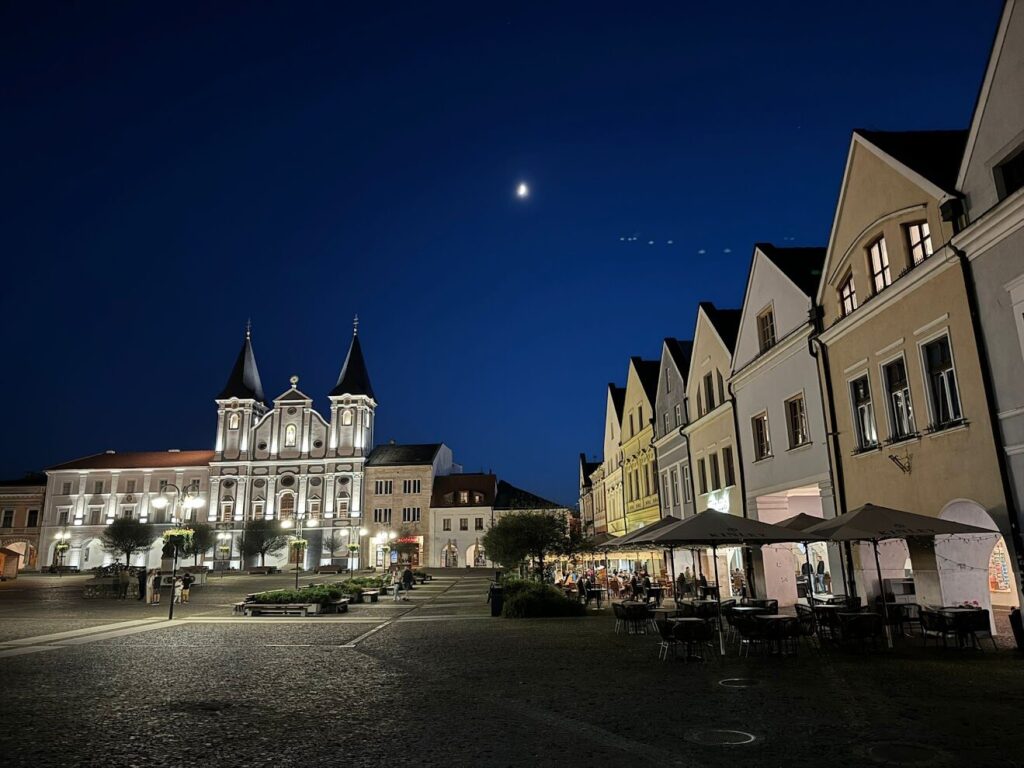
The Old Town Hall
Standing proudly on the square, Zilina’s Old Town Hall is one of the most photographed buildings in northern Slovakia. Its elegant Renaissance tower dates back centuries and serves as a symbol of the city’s proud mercantile past. The building today hosts occasional exhibitions and cultural events — check the local programme to see what’s on.
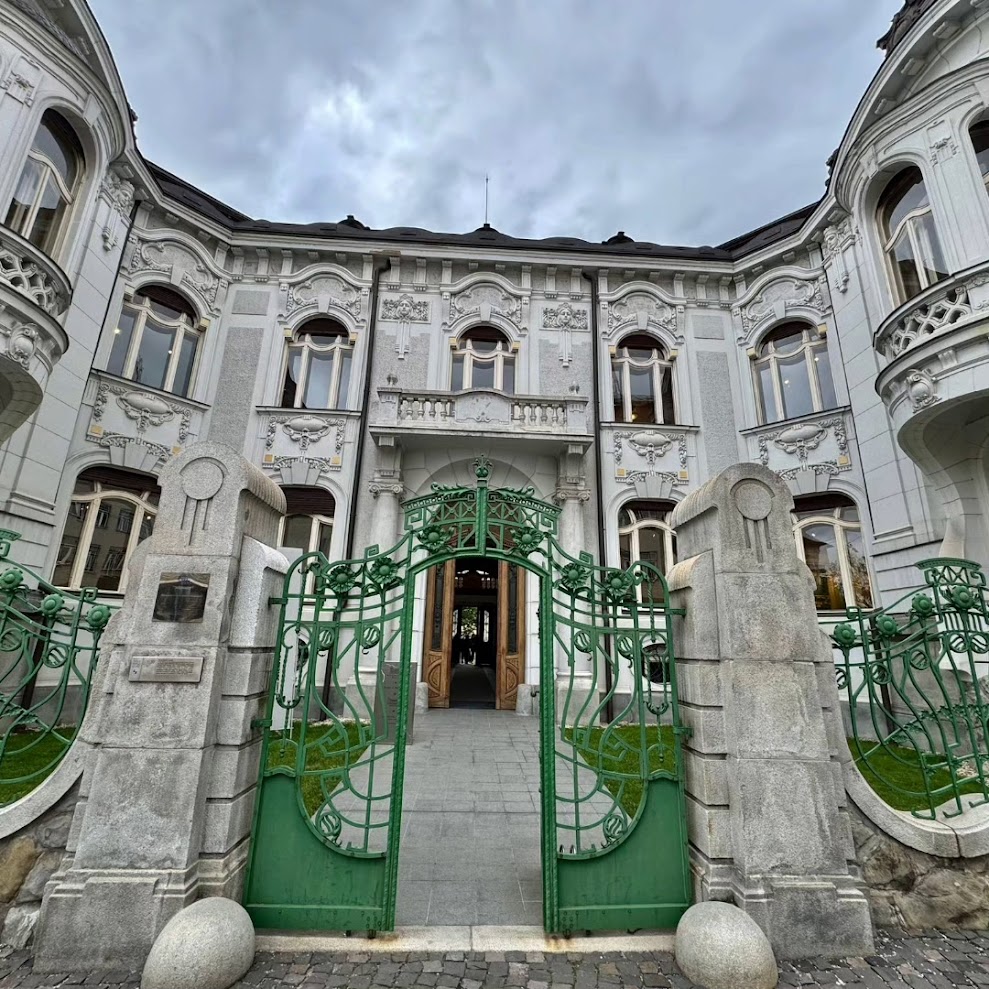
Rosenfeld Palace
For fans of architecture and history, the Rosenfeld Palace is another must-see Zilina attraction. Built at the turn of the 20th century for the wealthy Jewish entrepreneur Mr. Rosenfeld, the palace is an Art Nouveau gem inspired by Vienna’s famous Belvedere Palace, though about one-quarter its size. During the communist era, the building served as the headquarters of the young communist movement—the Pioneers. Today, it has been transformed into a lively leisure center for children, giving new life to this historic landmark.
The Neological Synagogue of Zilina – The Legacy of Jewish Presence
The development of Zilina is closely linked not only to the construction of the Košice–Bohumín Railway, which passed through the city, but also to its strategic location as a major transportation hub. This advantageous position helped Zilina grow into an important industrial and commercial center. The city’s growth was also strongly influenced by its vibrant Jewish community. Many Jewish entrepreneurs contributed significantly to Zilina’s prosperity, helping to shape it into one of Slovakia’s key industrial cities.
The prominence of the Jewish community in Zilina is reflected in the fact that the city had two synagogues. The “old” Orthodox synagogue served the traditional community, while the “new” Neological Synagogue, designed by the famous German architect Peter Behrens, could accommodate 750 people—450 men and 300 women. After a careful reconstruction, the Neological Synagogue now serves as a venue for cultural events, preserving the legacy of Zilina’s Jewish heritage.

The Bank Palace of Zilina
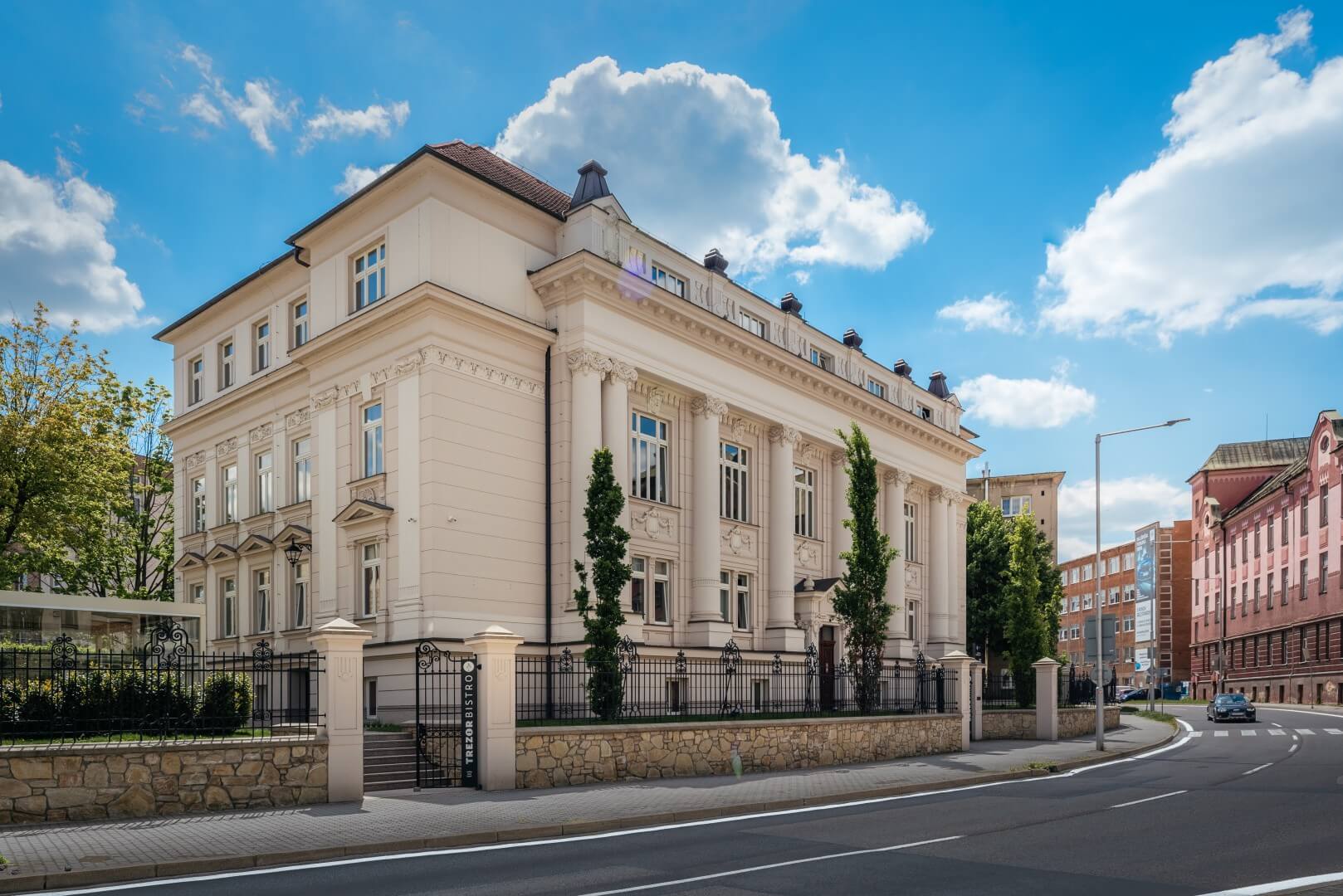
One of the most beautiful buildings in Zilina is this neoclassical palace, built in 1912, which stands as a symbol of the city’s growth and development. In 1938, its bank vaults temporarily housed the Czechoslovak crown jewels, as President Edvard Beneš feared that Prague might be bombed by Hitler’s forces. Today, after careful reconstruction, the building belongs to one of Slovakia’s most successful entrepreneurs, Milan Dubec, often referred to as the Slovak “Mark Zuckerberg.”.
The “New Bank” Palace
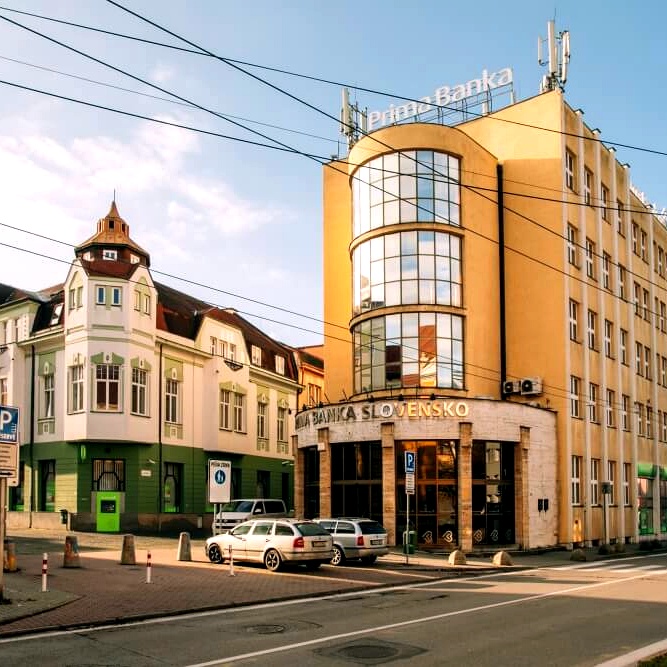
The development of Zilina as an important industrial center of Czechoslovakia is also reflected in the construction of the “New Bank” Palace, built in the functionalist style. Functionalism was a typical architectural style in the early years of Czechoslovakia, and this building stands as one of the most emblematic examples of that movement in the country.
The Church of St Stephen, King of Hungary
One of the hidden gems and unique things to do in Zilina is visiting the Church of St. Stephen, King of Hungary, located in the city district of Zavodie. This remarkable Romanesque single-nave church dates back to the 13th century and is especially valued for its rare medieval frescoes, which have been preserved for centuries.
The church is also popular among locals as a romantic wedding venue, thanks to its intimate atmosphere and historical charm. It is dedicated to St. Stephen, the first King of Hungary, who established the Hungarian Kingdom and played a key role in spreading Christianity in the region. At that time, the local Slavic population had already been largely Christianized, which makes this site an interesting reflection of the region’s complex history.

Budatin Castle
No visit to Zilina is complete without crossing the river Vah to explore Budatin Castle and the castle park, arguably the city’s most iconic landmark. Located on confluence of two rivers, the Vah and Kysuca rives, the castle is a picturesque medieval stronghold surrounded by a beautiful “English” park whose towering trees we planted by the castle’s former noble owners.
Inside the castle is located extraordinary museum of tinker crafts – very typical for the Zilina region. Over 5000 intricate ornaments fashoned from metallic wire and sheet metal, a craft tradition with deep roots in this region. Among the pices are decorative household items like coat hooks, birdcages, and patterned trays, alongside more imaginative creations: dragons, crocodiles, even a full scale locomotive frame. There are also exhibitions covering regional folk art, photography from the 19th and 20th centuries, and local archaeology.
o visit to Zilina is complete without crossing the Váh to explore Budatín Castle, arguably the city’s most iconic landmark. Positioned at the confluence of the Váh and Kysuca rivers, the castle is a picturesque medieval stronghold surrounded by a beautiful park whose towering trees were planted by the castle’s former noble owners.
Best time to visit: Spring and summer, when the park is at its finest.

Zilinsky Lesopark — Forest Trails on the City’s Doorstep
For those who want a taste of nature without the full mountain commitment, the Žilinský Lesopark (Zilina Forest Park) is an unexpected gem hiding on the city’s southern edge. An old-growth forest threaded with walking trails, it merges seamlessly with the surrounding farmland, so walkers are regularly rewarded with sudden wide-open clearings and sweeping views across the Malá Fatra mountains. Information boards along the trails document the forest’s wildlife, and there’s also a treetop rope park that makes it a hit with families.
Cap your walk with a meal at the forest’s own restaurant — it’s a very Slovak experience.
Small Fatra National Park
If you do only one thing in Zilina, make it a trek in the Small Fatra National Park. This stunning region is one of the most beautiful spots in Slovakia and a true paradise for hiking and trekking enthusiasts.
What makes Small Fatra especially appealing is its accessibility and relatively undiscovered character. Located at a slightly lower elevation than the famous High Tatras, the park enjoys milder weather and a longer hiking season—typically from Easter until mid-autumn. Unlike the Tatras, Small Fatra offers a wide variety of trails, ranging from immersive forest walks to challenging gorges, making it perfect for both casual hikers and experienced adventurers.
👉 Book our Trekking Holidays in Small Fatra
Top Hikes in Malá Fatra
Janosikove Diery, or the Janosik Gorge, is named after the legendary Slovak bandit Juraj Janosik, often called the Slovak Robin Hood, who—according to legend—stole from the nobles and gave to the poor. The gorge trail winds through spectacular narrow canyons carved over millennia by rushing water. Wooden ladders and bridges carry hikers over streams and past dramatic waterfalls, creating an adventurous and unforgettable experience. The trail is considered one of the most beautiful hikes not just in Small Fatra, but in all of Europe. To enjoy it with fewer crowds, visit on a weekday outside of July and August.
For those seeking a longer trek, the trail continues to Velky Rozsutec (1,610 m), one of the most beautiful peaks in Slovakia. Known as the rocky crown of the Small Fatra National Park, Velky Rozsutec offers breathtaking views, but the summit is closed in spring for environmental protection.
Hike to Chleb or Velky Fatransky Krivan
These peaks are easily accessible thanks to the KLD Chleb cable car. Velky Krivan (1,709 m), the highest peak in the Small Fatra National Park, offers a spectacular 360-degree panorama that few mountains in Slovakia can match. From the summit, you can even see the majestic peaks of the High Tatras.
The cable car from the Vrátna Valley significantly reduces the ascent, making Velky Krivan accessible even to those who are not seasoned mountaineers. After your trek, you can relax at the local mountain chalet, Chata pod Chlebom, where you can enjoy traditional Slovak “mountain” cuisine and soak in the stunning alpine surroundings.
The cost of a return ticket for the KLD Chleb cable car is approximately €24 per person. We recommend buying your tickets online, as it is usually cheaper than purchasing them at the cash desk.

The Castles of Zilina
The Zilina region, like much of Slovakia, is rich in historic castles and castle ruins. Some of the most notable sites in the area include:
- Strecno Castle – A dramatic hilltop fortress where the fairytale Dragon Heart was filmed.
- Lietava Castle – A beautifully preserved stronghold offering stunning views of the surrounding countryside.
- Old Castle (Varin Castle) – The remains of a medieval castle located just 4 km from Strecno Castle.
- Hricov Castle – Ruins of a historic castle that hint at the region’s medieval past.

When to Visit Zilina
Spring (April–June): The best season for hiking as trails dry out, wildflowers bloom across the mountain meadows, and waterfalls run at their most dramatic. The city is lively without being crowded.
Summer (July–August): Long, warm days are perfect for ridge hiking and outdoor dining. The most popular season — book accommodation in advance.
Autumn (September–October): Arguably the most beautiful season. The forests of Malá Fatra turn gold and copper, temperatures are ideal for hiking, and the summer crowds have gone.
Winter (November–March): Snow transforms the region into a skiing and winter hiking destination. Malá Fatra’s Vrátna valley offers excellent ski slopes. The city’s Christmas market on Mariánske Square is one of the finest in Slovakia.
Getting to Zilina
Zilina is exceptionally well connected for a city of its size. Zilina is an important transportation knot.
- By train: Direct trains from Bratislava (2–2.5 hours), Prague (4.5 hours), and Vienna (3.5 hours). The train station is in the city centre, a short walk from Mariánske Square.
- By car: On the D1/D3 motorway network, Zilina is approximately 200 km from Bratislava and 90 km from the Polish border.
- By air: The nearest international airports are Bratislava (BTS) and Kraków (KRK), both roughly 2–2.5 hours away.
Where to Stay in Zilina
Zilina offers a variety of accommodations for all types of travelers, from modern hotels to historic chateaux:
- Holiday Inn Zilina, 4* – The largest four-star hotel in the city, featuring extensive conference facilities. Conveniently located near the city center, next to the football and ice hockey stadiums.
- Boutique Hotel Dubna Skala, 4* – A stylish boutique hotel right in the heart of Zilina, perfect for those looking for a central location with charm and comfort.
- Grand Hotel Zilina, 3* – A historic three-star hotel where Czechoslovak President Dr. Edvard Benes once stayed. Located in the city center, it combines history with modern comfort.
- Chateau Gbelany, 4* – An old-fashioned chateau transformed into a modern hotel, complete with an excellent wellness area. Situated 10 km from the city center, ideal for a peaceful stay surrounded by nature.
Final Thoughts: Is Zilina Worth Visiting?
Absolutely and without hesitation. In a country full of underrated destinations, Zilina might be Slovakia’s best-kept secret. It offers something increasingly rare in modern European travel: a city with authentic character, surrounded by world-class natural beauty, where you won’t be fighting through tour groups to experience it.
Come for the mountains. Stay for the dumplings. Return because Small Fatra keeps calling you back.
Article by E-TRAVEL.SK — Your guide to Slovakia and beyond.
FAQ – Frequently Asked Questions about Zilina
Absolutely. Zilina is one of Slovakia’s most rewarding yet underrated destinations. Surrounded by mountain ranges and sitting at the confluence of three rivers, Žilina’s stunning geographical location is one of its most appealing aspects — and the city pairs that natural drama with a beautifully preserved medieval old town, excellent food, and a lively cultural scene. If you’re looking for an authentic Central European experience without the tourist crowds, Zilina delivers.
A minimum of two full days lets you explore the old town, visit Budatín and Strecno Castles, and enjoy a meal at a traditional koliba. Three to four days is ideal if you want to hike in Malá Fatra National Park — the gorge trail at Jánošíkove Diery and the summit of Veľký Rozsutec alone deserve a dedicated day each. If you’re a serious hiker, you could happily base yourself in Zilina for an entire week.
Zilina is best known as the gateway to Malá Fatra National Park, one of Slovakia’s finest hiking destinations. The town sits at the confluence of three rivers — the Váh, Kysuca, and Rajčianka — and serves as the centre of northwest Slovakia. Historically, it is also celebrated for its grand Mariánske Square, one of the most beautiful town squares in the country, and for its rich tinker craft tradition displayed at Budatín Castle.
Not at all — Zilina is excellent value. Compared to other European cities, Zilina is quite affordable. A full meal with drinks at a traditional Slovak restaurant typically costs €10–20 per person. Entrance fees to attractions like Budatín Castle are just a few euros, hiking in Malá Fatra National Park is free, and accommodation ranges from budget hostels to comfortable four-star hotels at prices well at the level of Western European equivalents.
Every season has something to offer. Spring brings mild temperatures between 10–20°C, perfect for outdoor activities, while summers are warm with temperatures reaching up to 30°C — ideal for exploring the city and nearby mountains. Autumn is cool and colourful, a great time to visit the parks and forests, and winters can be cold and snowy, perfect for winter sports in the nearby mountains. For hiking, May through October is the sweet spot. For the Christmas market on Mariánske Square, December is magical.