


Visit Trnava: Complete Travel & MICE Guide 2026
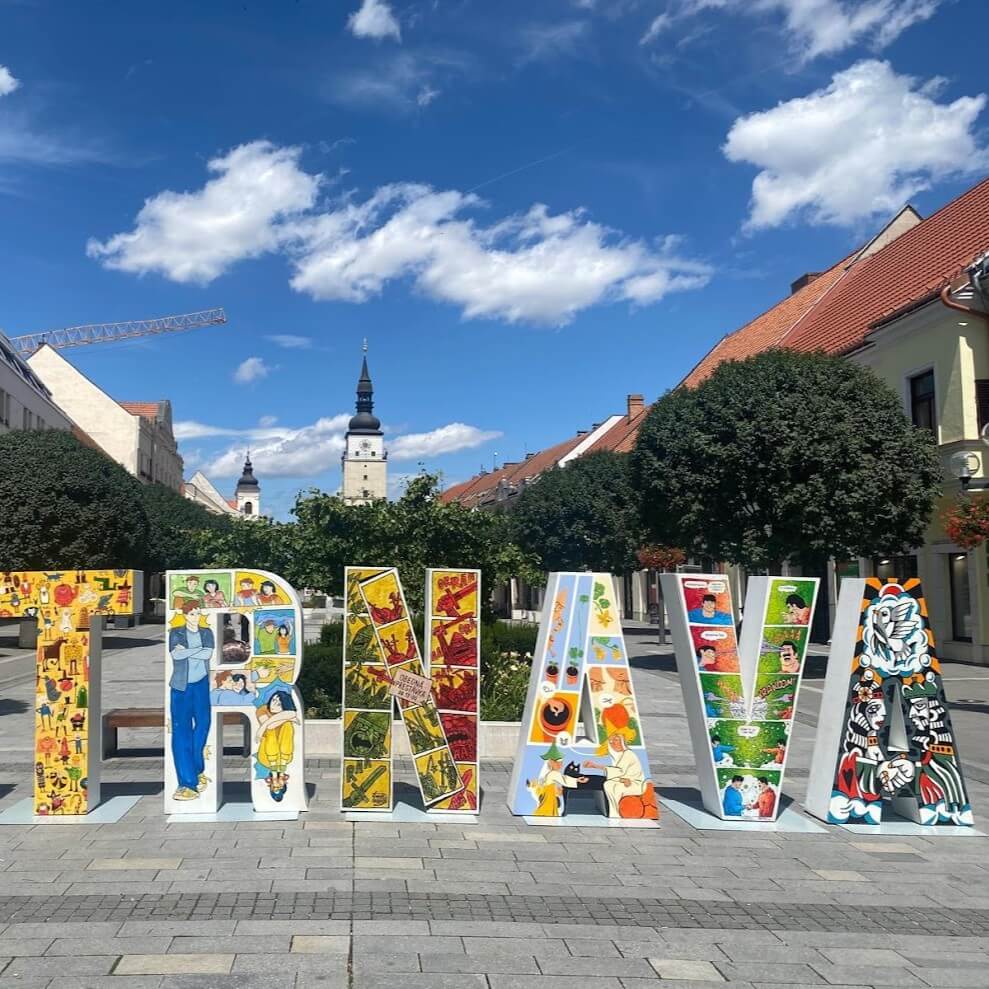
Just 50 km from Slovakian capital Bratislava lies city of Trnava, Slovakia’s best-kept secret often called “Little Rome of Slovakia” for its impressive collection of churches and religious architecture. Whether you are a planning a day trip from Slovak capital, seeking an authentic Slovak experience away from tourist crowds or organizing a corporate event with historical charm, Trnava offers a perfect blend of culture, history and modern amenities.
Why visit Trnava?
Trnava is the oldest Slovak Royal Town, granted this status by the Hungarian King Béla IV in 1238. Its golden age came in the 16th and 17th centuries, when the city became the center of the Catholic Church in the Kingdom of Hungary.
At a time when Bratislava served as the capital and coronation town of the Hungarian Kingdom, the Archbishop of Esztergom moved his seat to Trnava. During this important period, Trnava University was also established (1635), strengthening the city’s position as a major religious and educational hub.
Thanks to its remarkable concentration of churches, monasteries, and ecclesiastical institutions, Trnava earned the nicknames “Little Rome of Slovakia” and “Slovak Rome.”
Today, Trnava seamlessly blends well-preserved medieval architecture with dynamic university life, creating a vibrant atmosphere that appeals to history enthusiasts and culture seekers alike. In addition, Trnava is an important industrial center, home to major plants such as Peugeot and Citroën. This makes the city an excellent destination for business travelers and for organizing corporate events in Slovakia.
Key Facts:
- Population: 65,000
- Distance from Bratislava: 55 km (30 min by train, 45 min by car)
- Distance from Vienna Airport: 102 km (1 hour 20 min drive)
- Best time to visit: April-October (spring festivals, warm weather)
- Language: Slovak (English widely spoken in hotels & restaurants)
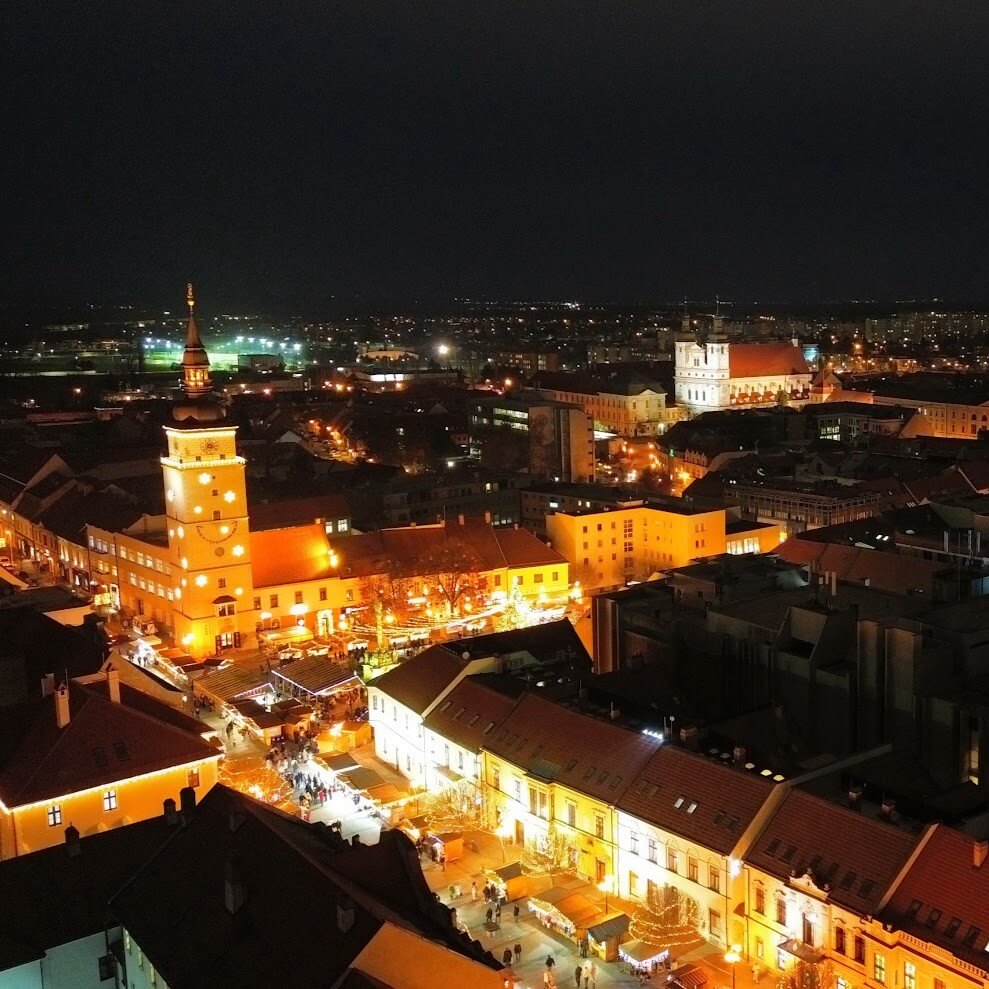
Top 8 Things to Do in Trnava & Surroundings
1. Explore St. John Baptist Cathedral
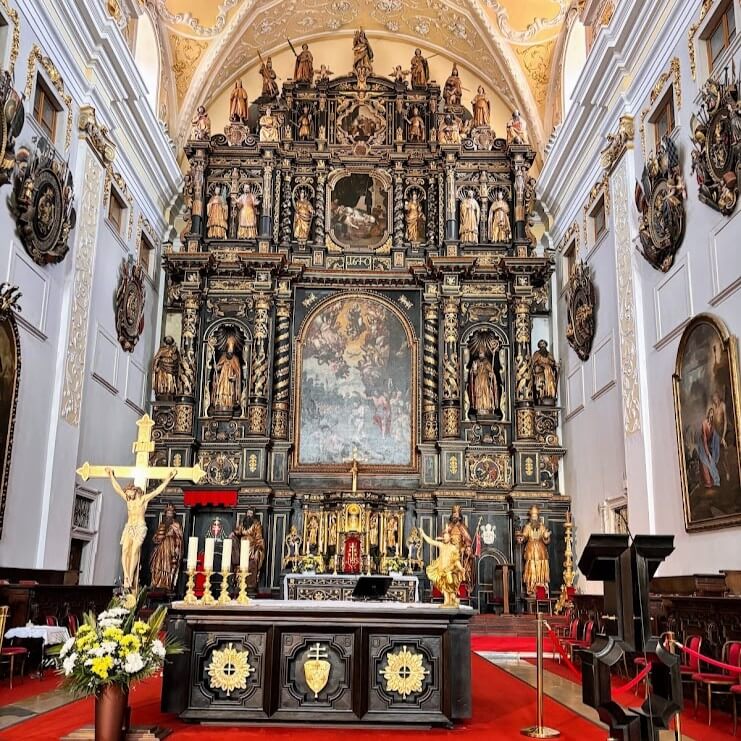
University Cathedral of St. John Baptist, is the Roman Catholic metropolitan cathedral of Slovakia built in the Early-Baroque style. The most valuable artifact of the interior is the highest wooden altar of Europe from 1640. The cathedral is seat of Trnava archbishop.
Details:
- Opening hours: from Monday to Friday, 10:00 am – 12:30 pm
02:00 pm – 04:00 pm
Saturday. 11:00 am – 04:00 pm - Holy Masses: from Monday to Saturday: 07:30 am
Sunday: 09:30 am, 11:30 am - Entrance fee: €3/ adult
2. The Basilica of St Nicolas
This Roman Catholic basilica dominates the town by its towers. The basilica was built in late gothic style in 15th century. The dominant part of very rare interior furnishings is a Gothic panel painting of the Trnava Virgin Mary Completing the canopied altar.
Every November, when the air in Trnava turns crisp and the streets grow quieter, something extraordinary begins inside the Basilica of Basilica of St. Nicholas. The candles are lit one by one, their soft glow reflecting off golden altars. The doors open early — and still, people are already waiting.
It is time for the Trnavská novéna.
For nine days, pilgrims travel from across Slovakia and beyond to gather before the miraculous image of the Virgin Mary. The story dated back to 1710, when the people of Trnava prayed before the image of Our Lady during a devastating plague. According to the tradition, the city was spared. Since then, the novena has been a symbol of the town.
3. Enjoy coffee & cake at Synagogue Café
Until the Second World War, Trnava was home to a vibrant Jewish community that played an important role in the city’s cultural and economic life.
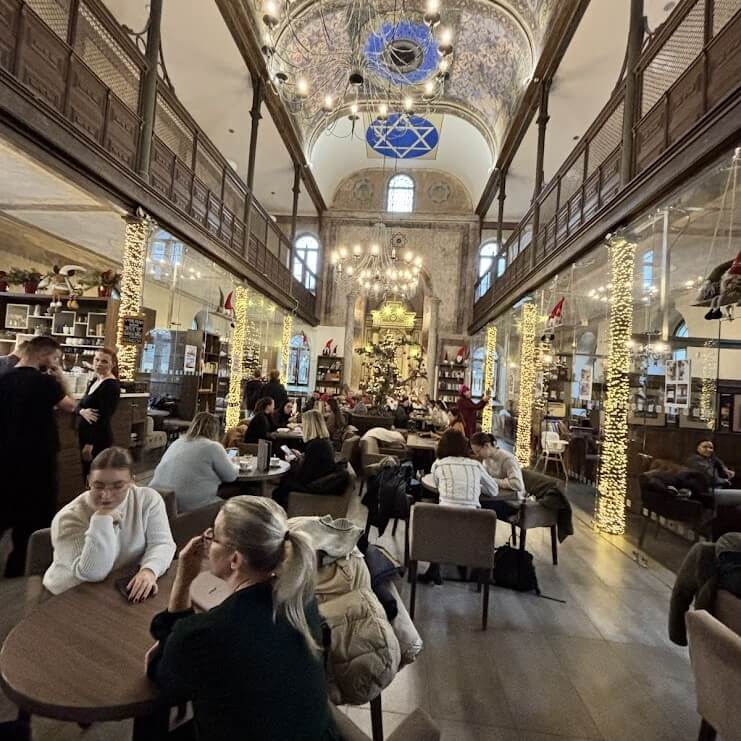
Today, their presence is remembered through the stylish Synagogue Café, located in the former Orthodox synagogue built in 1891 by the Viennese architect Jakob Gartner.
The synagogue underwent a major reconstruction in 2010, and the restoration works were awarded as the best reconstruction of a sacral building in Slovakia. The beautifully revitalized space now serves as a unique café where visitors can enjoy coffee and cake in an atmosphere that blends history with contemporary design.
Thanks to its distinctive character and elegant interior, the synagogue is also an ideal venue for informal business meetings or post-conference coffee breaks when organizing events in the Trnava region.
4. Climb the City Tower (Mestská Veža)
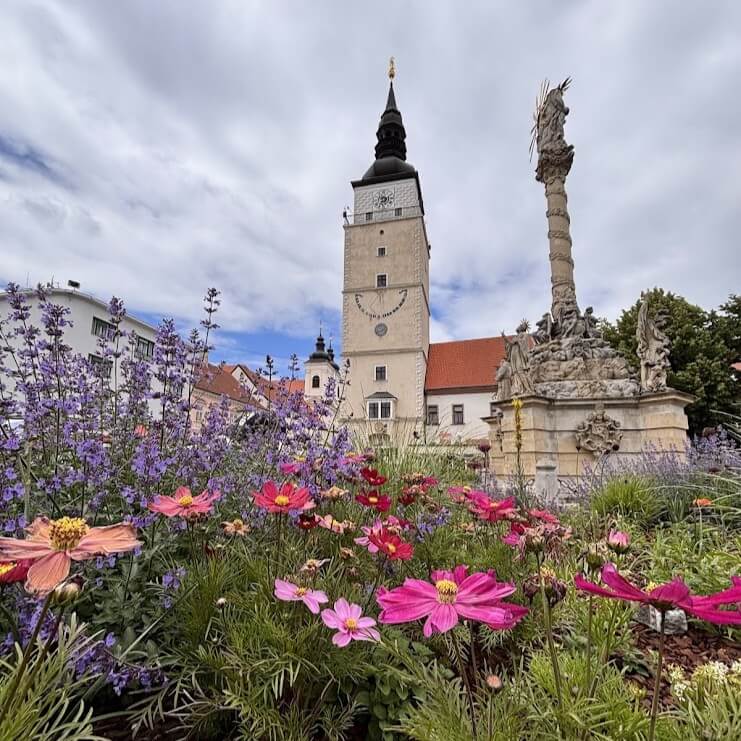
Built in 1574 on Gothic foundations, the 57-meter City Tower is Trnava’s iconic landmark. The observation gallery at 29 meters offers stunning 360-degree views of the historic center and surrounding countryside. Don’t miss the 17th-century bells that chime twice per hour.
Details:
- Opening hours: from Monday to Friday, 11:00 am – 05:00 pm
from Saturday to Sunday, 10:00 am – 06:00 pm - Entry fee: €4 adults, €2 children
5. Walk the Medieval Town Walls
Trnava boasts one of Central Europe’s best-preserved medieval fortification systems, with sections dating from the 13th-16th centuries. The 1.5 km walk around the old town walls provides unique perspectives of the city and glimpses into medieval defense architecture.
Best access points:
- Near Trojičné námestie (Trinity Square)
- Behind Hotel Spectrum
6. The Football Stadium of Anton Malatinský
The City Arena Trnava, also known as the Štadión Antona Malatinského, is the home ground of the local football club FC Spartak Trnava.
Trnava is widely regarded as the “Mecca of Slovak football,” famous for having some of the most passionate and devoted supporters in the country. Matchdays transform the city into a sea of red and black, as fans proudly support their team with unforgettable energy and atmosphere.
The stadium is named after the legendary coach Anton Malatinský, affectionately known among locals as Toni-Báči. Under his leadership, Spartak Trnava won the Czechoslovak league title twice and built one of the strongest teams in Czechoslovak football history during the late 1960s and early 1970s.
Despite his sporting success, Malatinský also faced persecution from the communist regime, which adds a deeper historical dimension to his legacy.
7. The village of Dolná Krupá
The village of Dolná Krupá, located just 13 km (about a 15-minute drive) from Trnava, is known as both the “Village of Roses” and the “Beethoven Village.”
According to local tradition, the famous Austrian composer Ludwig van Beethoven stayed here as a guest of the noble Chotek family at their manor house. During his visits, he is said to have taught music to the noble daughters and even fallen in love with one of them. The elegant manor house still stands in the village park, adding a romantic and musical atmosphere to Dolná Krupá’s story.
Dolná Krupá is also famous as the Village of Roses thanks to the vast rosarium established in the 19th century by the noblewoman Mária Henrieta Choteková, one of the most important rosarians in Central Europe. One of the rose varieties was even named in her honor. In summer, the village blooms with thousands of roses, filling the air with fragrance and color.
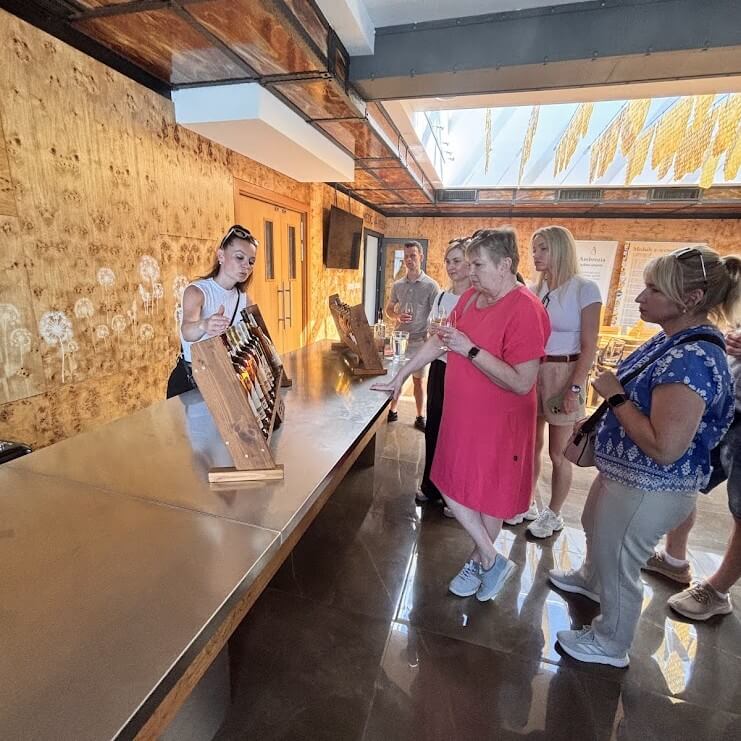
Next to the manor house, visitors will find the unique family-owned mead manufactory Medolandia, surrounded by its own beautiful rosarium. Here, you can taste the famous Trnavská medovina (Trnava mead) — a traditional Slovak honey wine and honey liqueur, made according to long-standing local traditions.
Dolná Krupá is therefore a perfect blend of music, romance, noble heritage, roses, and sweet Slovak flavors — an ideal excursion from Trnava. 🌹
8. Experience Trinity Square (Trojičné námestie)
The heart of Trnava’s social life, Trinity Square is surrounded by colorful Baroque and Rococo buildings, outdoor cafés, and restaurants. The Town Tower dominates the square, creating picture-perfect views from every angle.
Group Day trip from Bratislava to Trnava: Perfect Itinerary
Duration: 5-6 hours
Best for: Culture lovers, photographers, tourist groups, conference attendees with a free day or afternoon
Morning (9:00-12:00):
- 9:00 – Departure from Bratislava to Trnava
- 9:50 – Arrival in Trnava
- 10:00 – 11:30 – walking tour of Trnava, including entrance either to St. John Baptist Cathedral or St. Nicolas Basilica
- 11:30 – Climb City Tower for panoramic views
- 11:45 – Deaparture to Dolná Krupá
Lunch (12:00-13:30):
- Recommendation: Maria Henrietta Restaurant of Medolandia
- Must try: Bryndzové halušky (Slovak national dish – potato dumplings with sheep cheese) or traditional Slovak chicken, veal or pork schnitzel
Afternoon (13:30-16:00):
- 13:30 – 14:30 – Tasting wandering in Medolandia, including visit of rosarium of Maria Henrietta
- 16:30 – Entrance to one of the most beautiful castles of Slovakia – The Red Stone Castle
Return (18:00):
- Return back to your hotel in Bratislava. The journey takes about 40-50 min.
Best Time to Visit Trnava
Spring (April-May):
✅ Mild weather, blooming parks
✅ Easter celebrations
✅ Fewer tourists
❌ Some attractions may have limited hours
Summer (June-August):
✅ Dobrofest (June), Trnava Fair (September)
✅ Longest opening hours
✅ Outdoor dining on Trinity Square
❌ More crowded, higher accommodation prices
Autumn (September-October):
✅ Wine harvest season – best for winery visits
✅ Beautiful fall colors
✅ Moderate temperatures
Winter (November-March):
✅ Christmas markets (December)
✅ Snow-covered historic center (picturesque)
✅ Lowest prices
❌ Limited opening hours, cold weather
Plan Your Visit to Trnava
Need help organizing your trip to Trnava?
E-TRAVEL.SK since 1993, specializing in custom tours, MICE events, and corporate travel throughout Slovakia and Central Europe. From individual travelers to large corporate groups, we create unforgettable experiences.
Contact us for:
- Private guided tours of Trnava
- Wine tasting programs
- Multi-day itineraries combining Trnava with Bratislava, Vienna, and Budapest
- Corporate event planning and team-building activities
- Hotel bookings and group transportation
❓ FAQ – Visit Trnava
1. Why is Trnava called “Little Rome of Slovakia”?
Trnava earned this nickname during the 16th and 17th centuries when it became the seat of the Archbishop of Esztergom and the center of the Catholic Church in the Kingdom of Hungary. The city’s remarkable concentration of churches, monasteries, and ecclesiastical institutions — combined with the establishment of Trnava University in 1635 — gave it a religious and cultural significance comparable to Rome. Today, visitors can still explore this rich heritage through numerous historic churches and religious monuments throughout the old town.
2. How far is Trnava from Bratislava and how do I get there?
Trnava is located just 55 km (34 miles) from Bratislava, making it an easy day trip:
- By train: 30 minutes, frequent connections from Bratislava hlavná stanica
- By car: 45 minutes via D1 motorway
- By private transfer: Available for groups through DMC services
The proximity to both Bratislava and Vienna Airport (102 km, 1 hour 20 minutes) makes Trnava easily accessible for international visitors and corporate groups.
3. How long should I spend in Trnava?
For a day trip: 5-6 hours is sufficient to see the main attractions including St. John Baptist Cathedral, City Tower, Trinity Square, and the medieval town walls.
For a more relaxed visit: A full day (8-10 hours) allows you to include nearby attractions like Dolná Krupá village with its Beethoven manor house and Medolandia mead manufactory, or visit the stunning Red Stone Castle.
For corporate groups or team-building: Consider combining Trnava with wine tastings in the Small Carpathian region or organizing multi-day programs that include Bratislava, Vienna, and Budapest.
4. What is the best time to visit Trnava?
April-October is the best time to visit Trnava, with:
- Spring (April-May): Mild weather, fewer crowds, Easter celebrations
- Summer (June-August): Dobrofest music festival, longest opening hours, outdoor dining
- Autumn (September-October): Wine harvest season, beautiful fall colors, ideal temperatures
November is special for pilgrims attending the famous Trnavská novéna at the Basilica of St. Nicholas — a nine-day religious tradition dating back to 1710.
Winter offers charming Christmas markets and snow-covered medieval streets, though some attractions have limited hours.
5. Is Trnava suitable for corporate events and business groups?
Yes! Trnava offers unique advantages for corporate events:
✅ Proximity to Bratislava — Easy access for international attendees
✅ Authentic Slovak experience — Less touristy than the capital
✅ Lower costs — More affordable venue and accommodation options
✅ Unique venues — Historic buildings, the Synagogue Café for meetings, nearby wineries
✅ Team-building opportunities — Brewery tours, wine tastings at Medolandia, historical walking tours
Trnava is also an important industrial center (Peugeot, Citroën plants), making it ideal for combining business with leisure.Contact E-TRAVEL.SK DMC for tailored corporate programs in Trnava
6. What should I try in Trnava?
Don’t miss these authentic Slovak experiences:
🍷 Trnavská medovina — Traditional Slovak honey wine and liqueur from Medolandia manufactory in Dolná Krupá
🧀 Bryndzové halušky — Slovakia’s national dish: potato dumplings with sheep cheese and bacon
☕ Coffee at Synagogue Café — Unique setting in the beautifully restored 1891 Orthodox synagogue
⚽ Football match at Spartak Trnava — Experience the passion of “Slovak football Mecca” (if visiting during season)
🌹 Rosarium visit — Thousands of roses bloom in Dolná Krupá during summer months
Planning a group in Slovakia or Central Europe?
e-travel is an incoming DMC in Bratislava — send us the group, the dates and the cities, and we come back with a tailored proposal at net rates.