


Spiš Region: The Gothic Fairytale Under the Peaks of the Tatras
Discover Slovak Gothic Kingdom – A UNESCO Treasure Chest
Spiš Region is one of the most authentic and beautiful regions of Slovakia. You can find three national parks and five UNESCO World Heritage sites here. This picturesque region lies beneath the majestic peaks of the High Tatras.
Typical features of Spiš Region are:
- National Parks – Pieniny National Park, High Tatras, Slovak Paradise and a small part of the Low Tatras.
- UNESCO – Levoča, Spiš Castle, Spišská Kapitula Abbey, Church of the Holy Spirit in Žehra, travertine hills Sivá Brada, Dreveník and Pažica, wooden articular church in Kežmarok.
- Gothic Churches
- The masterpieces of Master Paul from Levoča – what Michelangelo is for Italy, Master Paul from Levoča is for Slovakia. He lived in the 16th century in the town.
- Basilicas minor – Basilica of St. Mary in Levoča, St. Jacob Basilica in Levoča and St. Cross Basilica in Kežmarok.
- Religious region – Spiš is still a religious region of Slovakia, where you can also find the Jerusalem of Spiš.
E-TRAVEL.SK DMC has been unlocking the secrets of this extraordinary corner of Central Europe for discerning international travellers, tour operators and corporate groups. This is our unfiltered love letter to the land of Spiš — and your insider blueprint for exploring it.
Distances
Bratislava – Spiš Region: 330 km
Košice ´- Spiš Region: 100 km
Krakow – Spiš Region: 150 km
Budapest -Spiš Region: 250 km
Vienna ´- Spiš Region: 4000 km
🏰 Spiš Castle — The Giant That Defines a Region
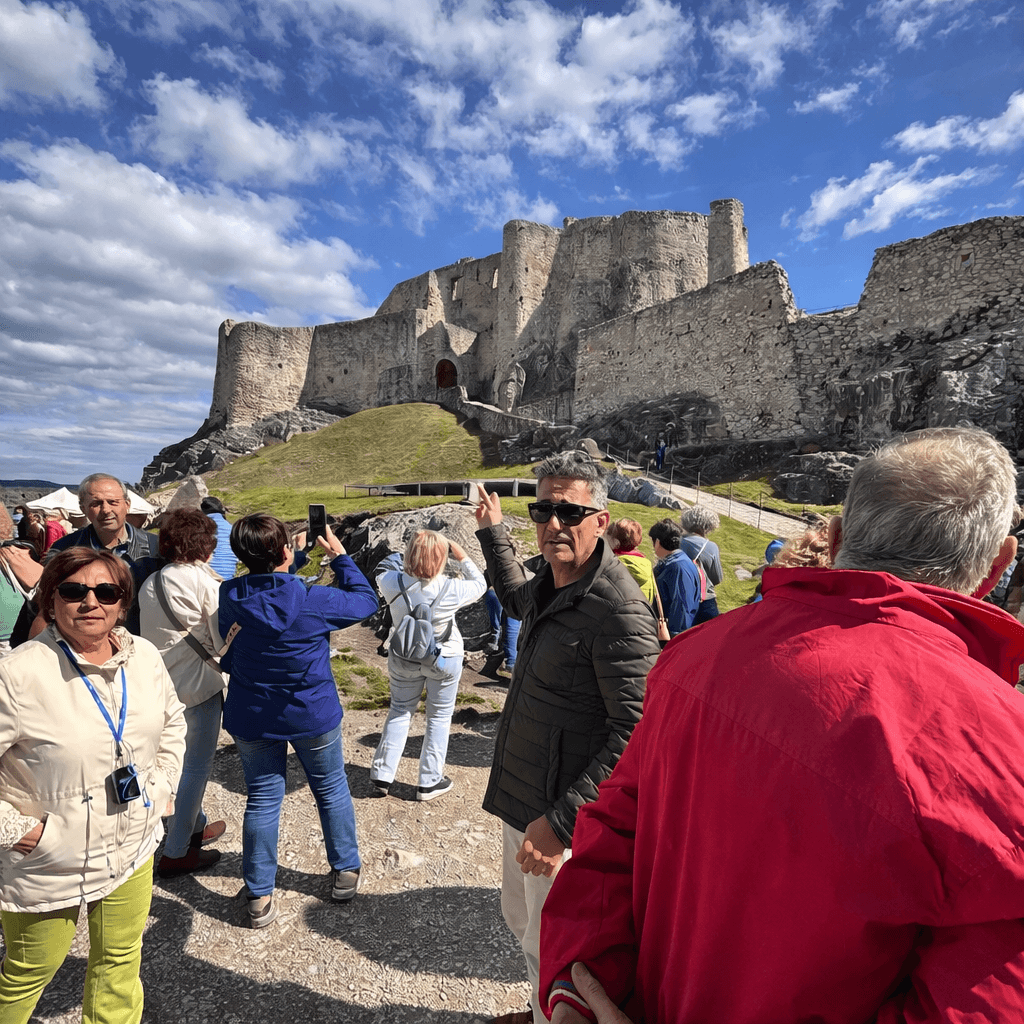
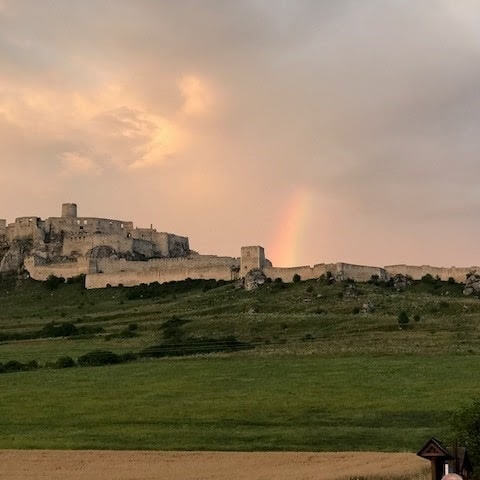
At over 41,000 square metres of built surface, Spiš Castle (Spišský hrad) is one of the largest castle complexes in Central Europe. That is not a boast — it is a geological fact. The ruins dominate the Spiš plain from 634 metres above sea level, visible for kilometres in every direction, a stone crown over an ancient kingdom.
Inscribed on the UNESCO World Heritage List in 1993 alongside the historic town of Levoča and the Spiš Chapter, the castle’s origins date to the 12th century. Over the following five hundred years, it morphed from a Romanesque fortification into a Gothic stronghold, then a Renaissance palatial complex. Today its layered architecture reads like a textbook of European history — one you explore in hiking boots with the wind in your face.
For international visitors and group tour operators, the castle is the anchor of any Eastern Slovakia itinerary. E-TRAVEL.SK DMC organize the entrance to the castle as part of the tour for both individual and group travelers.
The Slovak Vatican – Spišská Kapitula
Spišská Kapitula is the headquarters of the Spiš Archdiocese and the seat of the Archbishop of Spiš since the 11th century. Since 1948, it has been part of the town of Spišské Podhradie. Spišská Kapitula consists of the Cathedral of St. Martin (Spišská Kapitula), the Bishop’s Palace, the Clock Tower, the Priest Seminary, and the fortification wall. During the time of communism, Spišská Kapitula was used as a police school, and the Priest Seminary was closed.
Cathedral of St. Martin
The most important church of the Spiš Region. This Gothic church dates back to the 13th century and was transformed into its Gothic form in the 16th century. The Cathedral consists of three naves and preserves unique medieval furnishings.
Spiš Jerusalem
In Spišská Kapitula, in the area called Pažica, a unique concept located in Slovakia known as the Jerusalem of Spiš Region was created. It represents the Via Dolorosa in Jerusalem, and the chapels were built to copy the exact distances of the stations of Jesus’ Via Dolorosa. The route ends at the hill of Sivá Brada, which symbolizes Golgotha.
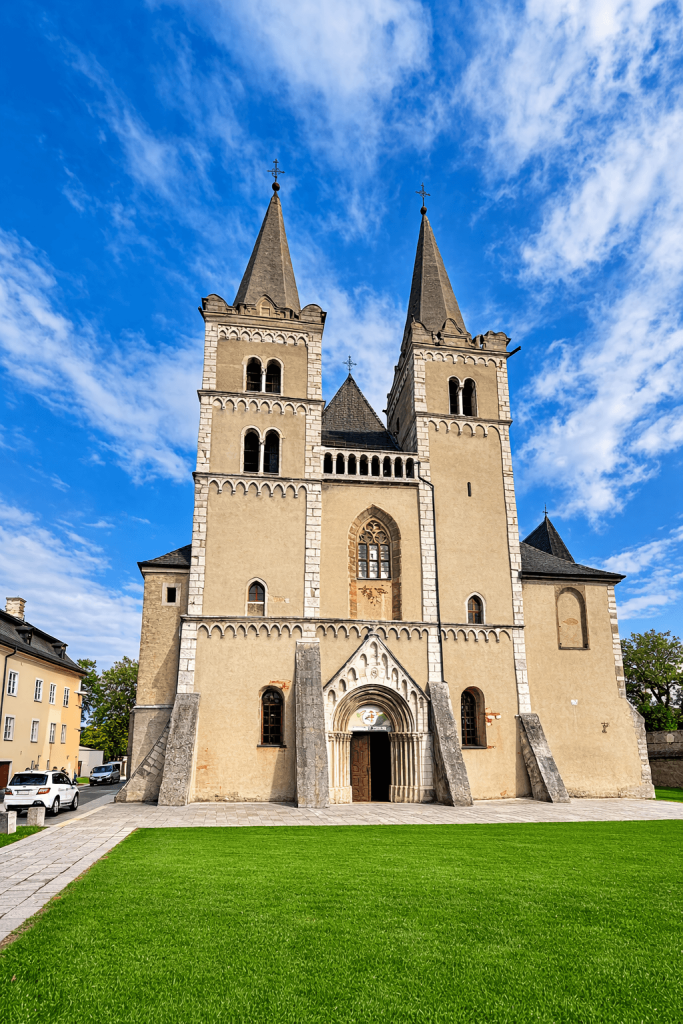
The Church of Holy Spirit in Žehra
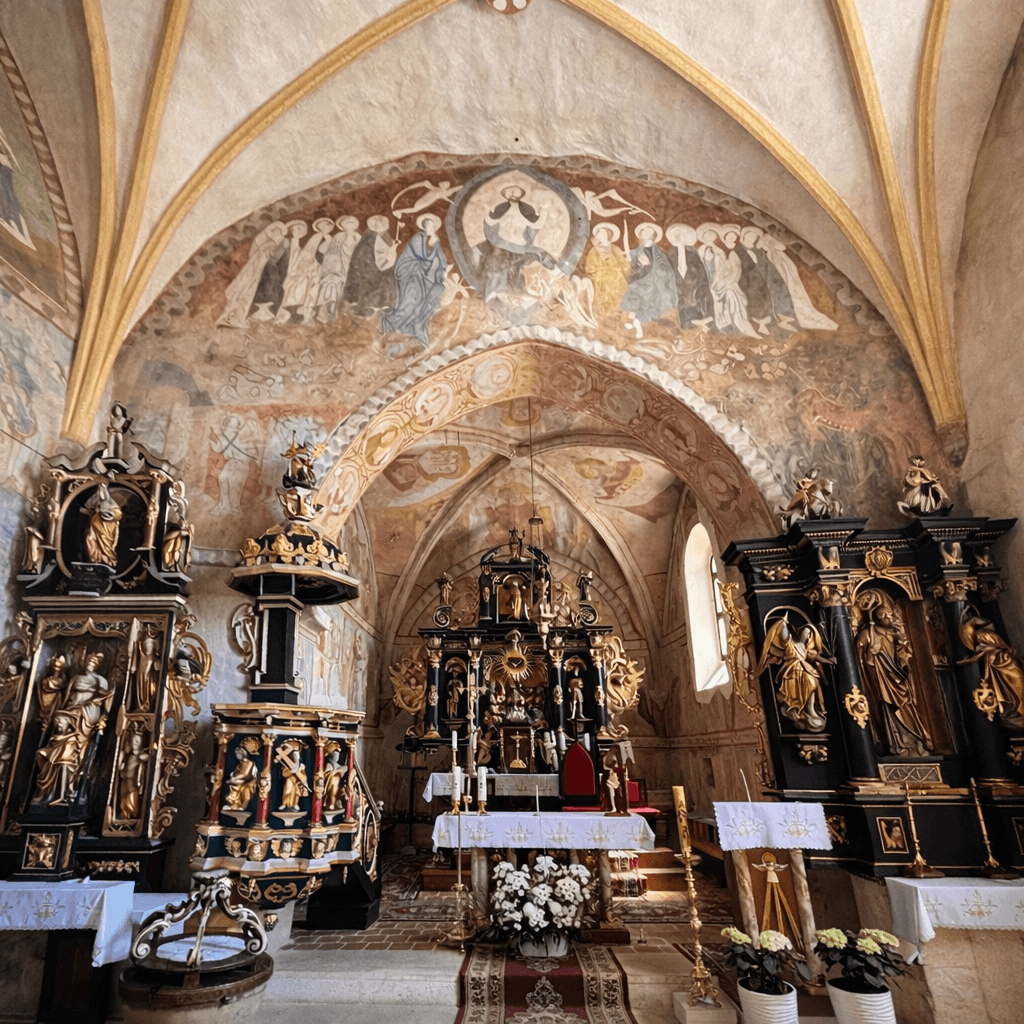
Nestled in the heart of Slovakia, the small village of Žehra is a hidden gem known for two remarkable sights. Wander through the colorful, extravagant houses of the Roma community, and step back in time at the historic Church of the Holy Spirit, dating from the 13th century. Built in the Romanesque style, the church’s interior is a true masterpiece, covered in vibrant Gothic frescoes that have survived centuries in astonishingly pristine condition. A visit to Žehra is like stepping into a living canvas of history and culture.
Levoča – Where Gothic Ambition Reached for the Heavens
Levoča is often called the “shining gem of the Spiš Crown” in Slovakia. This medieval town located in the heart of Spiš Region, with its mostly Gothic-Renaissance architecture, is one of the coziest and most historically rich towns in the country. During the Middle Ages, Levoča was almost as important as Krakow, and economically it was even wealthier.
The town lay on a historic trade route connecting East and West and played a significant role in the Kingdom of Hungary. One of the most famous legends is that of the White Lady of Levoča, “Levočská Biela Pani,” who is said to have betrayed the rebel army of Francis II Rákóczi, opening the city gates to the Habsburg forces.
The golden era of Levoča came to an end when it was decided that the Košice–Bohumín railway would not pass through the town. Today, Levoča is a small town with a population of around 10,000. The town is also known as the capital of the visually impaired in Slovakia, as it is home to both a grammar school for the blind and a high school for the blind.
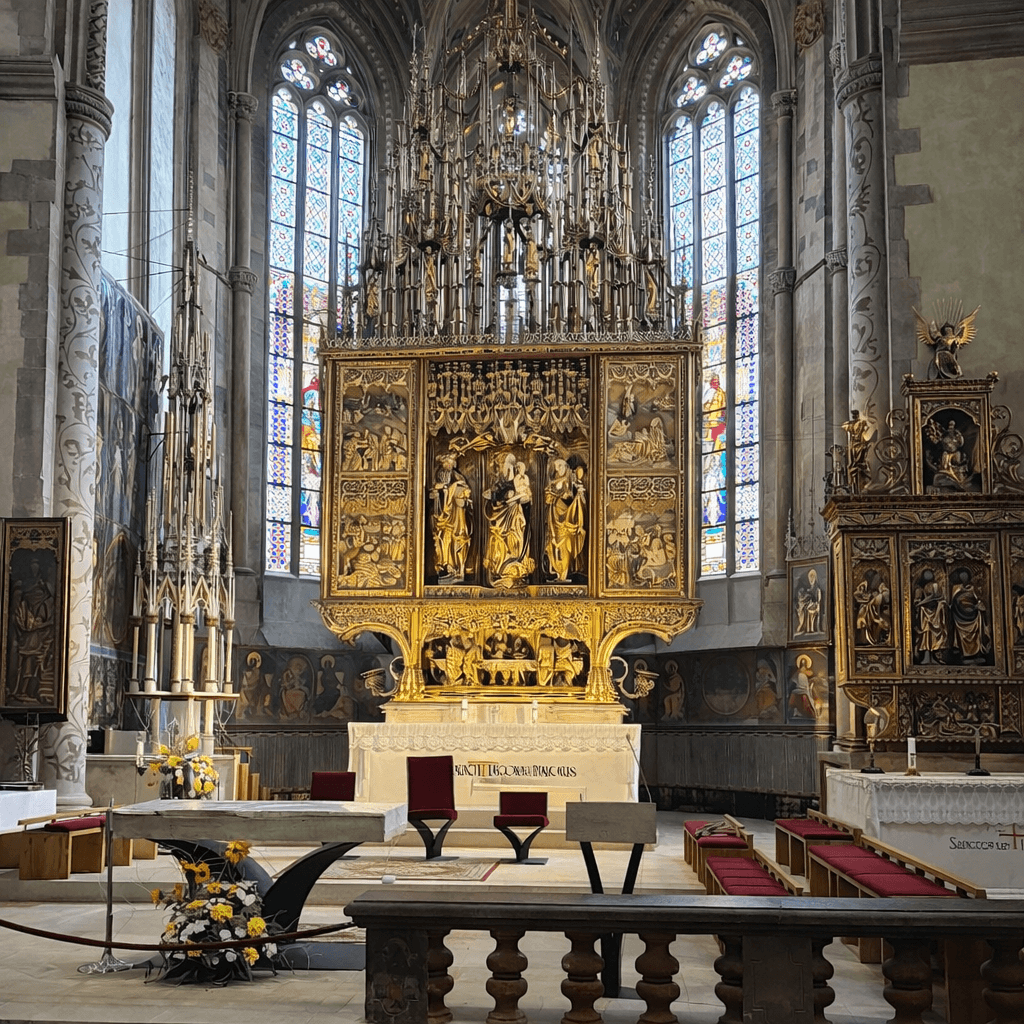
The dominant landmark of Levoča is the Basilica Minor of St. Jacob, originally built in the 14th century. It is one of the largest churches in Slovakia, with richly decorated interiors. Its most remarkable feature is the wooden altar by Master Paul of Levoča, the tallest Gothic wooden altar in the world. The altar was last renovated in 2015, preserving its extraordinary detail and craftsmanship.
The main square (Námestie Majstra Pavla) is one of the most beautiful in the entire Carpathian Basin. Surrounded by patrician burgher houses, Renaissance arcades and the Gothic town hall, it is an open-air museum that is still very much alive.
Every July, the hilltop basilica above the town comes alive as the Marian pilgrimage draws hundreds of thousands of devoted pilgrims. The atmosphere is electric, a mix of faith, tradition, and awe that must be experienced to be truly understood. This sacred site was also the stage for Slovakia’s largest-ever pilgrimage. In 1995, over 1 million people gathered here to attend a Holy Mass celebrated by Pope John Paul II — nearly a fifth of the entire Slovak population. The memory of that day still echoes through the hills, a testament to the power of faith and community.
Kežmarok
The medieval Slovak towns of Levoča and Kežmarok might just remind you of Florence and Siena — at least if you’re willing to indulge a little exaggeration. Both towns are treasure troves of Gothic and Renaissance architecture, each street and square echoing centuries of history. Much like Siena once competed with Florence for supremacy in Tuscany, Levoča and Kežmarok once vied for the title of the leading town in the Spiš region of Slovakia. In the end, Kežmarok took a step back, but its historic city center remains a jewel, brimming with monuments that whisper stories of its glorious past.
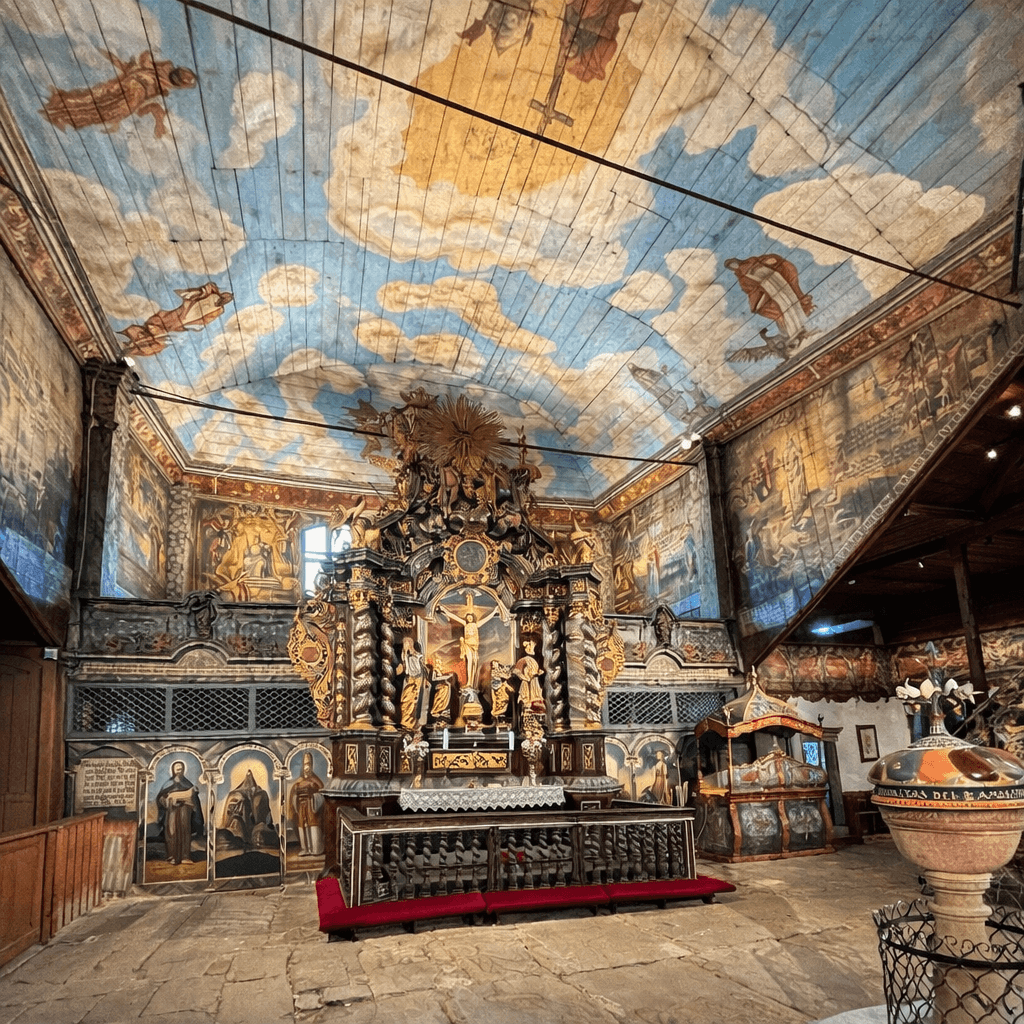
The crown jewel of the city is the wooden Articular Church, built in the early 18th century. Its construction was governed by strict laws — the Articles — which allowed Protestants to build only one wooden church outside the city walls, with the entrance facing away from the street, to be completed within a single year, and without using a single nail. According to legend, Swedish sailors lent a hand in its construction, and as a tribute to their help, the church’s roof resembles the hull of a ship — a unique architectural detail that continues to fascinate visitors today.
Another highlight of Kežmarok is the New Protestant Church, built in an eclectic style with Byzantine features, designed by the famous Austrian architect Theophil Hansen, who also designed the Austrian Parliament building in Vienna. The church is the burial site of the Hungarian national hero Imrich Thököly, who led one of the rebellions against the Habsburg royal family.
The city also boasts a well-preserved medieval center, featuring the Cage of Shame, the city castle, and the Roman Catholic Basilica Minor of the Holy Cross.
Beyond the UNESCO Triangle — Hidden Spiš Awaits
The Spiš region is a treasure trove of history and nature. Beyond its breathtaking Gothic UNESCO heritage, it boasts the soaring peaks of the High Tatras, the wild, untouched beauty of Slovak Paradise, and the mysterious Pieniny region, home to the enchanting Red Stone Castle. Every corner of Spiš invites exploration, adventure, and discovery — a place where history and nature meet in perfect harmony.
🤝 Why Plan Your Spiš Experience with E-TRAVEL.SK DMC?
E-TRAVEL.SK DMC is Slovakia’s specialist destination management company for international tour operators, travel agencies and corporate clients. We do not sell standard itineraries — we craft experiences that earn genuine gasps. Our team has on-the-ground expertise, exclusive venue access and the local relationships that make the impossible happen smoothly.
What we offer for the Spiš Region:
- Private guided tours of Spiš Castle, Levoča and Spiš Chapter
- Exclusive early-access and after-hours visits for premium groups
- MICE programmes with unique medieval-themed team building
- Bespoke multi-day itineraries combining UNESCO sites, nature and gastronomy
- Airport transfers, luxury coaches and full logistical support throughout Slovakia
- Fully customised group proposals for travel agents and tour operators
Spiš is not just a destination. It is an argument — made in stone, Gothic wood and frescoed plaster — for why Slovakia deserves to be on every serious traveller’s map. The only question is: when do you arrive?
Ready to Explore Spiš Region?
Contact E-TRAVEL.SK DMC for a custom group proposal or tour operator package.
www.e-travel.sk | info@e-travel.sk
FAQ about Spiš Region
Spiš Region is one of Slovakia’s most authentic destinations, famous for five UNESCO World Heritage Sites, three national parks, stunning Gothic architecture and medieval towns nestled beneath the High Tatras. It is home to Spiš Castle — one of the largest castle complexes in Central Europe — the medieval town of Levoča, Spišská Kapitula and the frescoed Church of the Holy Spirit in Žehra.
Five — Spiš Castle, the historic town of Levoča, Spišská Kapitula, the Church of the Holy Spirit in Žehra, and the travertine hills of Sivá Brada, Dreveník and Pažica. The Wooden Articular Church in Kežmarok adds yet another layer of extraordinary heritage to the region.
A 16th-century woodcarver often described as the Slovak Michelangelo. His masterpiece — the Gothic wooden altar in the Basilica Minor of St. James in Levoča — stands 18.62 metres tall and is the tallest Gothic wooden altar in the world.
It is easily reachable from Košice (100 km), Krakow (150 km), Budapest (250 km) and Bratislava (330 km) — making it ideal for multi-country Central European itineraries.
E-TRAVEL.SK DMC is Slovakia’s specialist Destination Management Company offering private guided tours, exclusive UNESCO site access, MICE programmes and bespoke multi-day itineraries. Contact us at info@e-travel.sk or visit www.e-travel.sk.
Planning a group in Slovakia or Central Europe?
e-travel is an incoming DMC in Bratislava — send us the group, the dates and the cities, and we come back with a tailored proposal at net rates.